

Add your title here
This is the text area for this paragraph. To change it, simply click and start typing. Once you've added your content, you can customize its design by using different colors, fonts, font sizes and bullets. Just highlight the words you want to design and choose from the various options in the text editing bar. This is the text area for this paragraph. To change it, simply click and start typing. After adding your content, you can customize it.
Most organizations function. Few function as well as they could.
There is always a way forward. Finding it sometimes takes a view from outside the system.
Every organization is different. What they share: the cause almost always runs deeper than what becomes visible first.
Some come with a clear question. Others with a sense that something isn't working.
The starting point shapes the path.
Organizational Design
When the same problems keep recurring - in different places, in different forms - it's not a leadership failure. It's a signal from the system.
Organizational design focuses on the structures, responsibilities, and decision-making processes that generate this behavior. The result is an organizational architecture that supports the entire system.
Why it usually goes wrong
Organization is the most underestimated leadership task. And the one most consistently worked around rather than on.
When a functional structure stops holding, the next logical answer is often a matrix organization. It solves the visible problem and adds a layer of complexity the system doesn't need. Then agile methods enter the picture - Holacracy, Scrum, OKRs. The context rarely asks for it. The zeitgeist does.
Culture gets addressed through workshops and communication campaigns. Neither changes anything, because culture isn't directly designable. It's the result of what the system asks of people. Those who want to change culture need to work on the architecture.
Work itself is rarely understood. Many assume the topic is settled once the job description is written. Work architecture - how work is actually done and coordinated - stays untouched. And with it, the source of overload, poor collaboration, and goals that neutralize each other.
The most expensive misunderstanding: leaders believe they can observe their system from the outside. They are part of it - and therefore part of the dynamics they are describing. That's not a criticism. It's a cybernetic fact. Those who ignore it will keep observing the same patterns - in different places, in different forms.
I work from the situation. Sometimes what's needed is structural diagnosis and clear recommendations. Sometimes it's someone who holds the process and creates space. Often both, in different phases of the same mandate. What matters is not the method - it's what the situation actually calls for, including the things nobody wants to name..
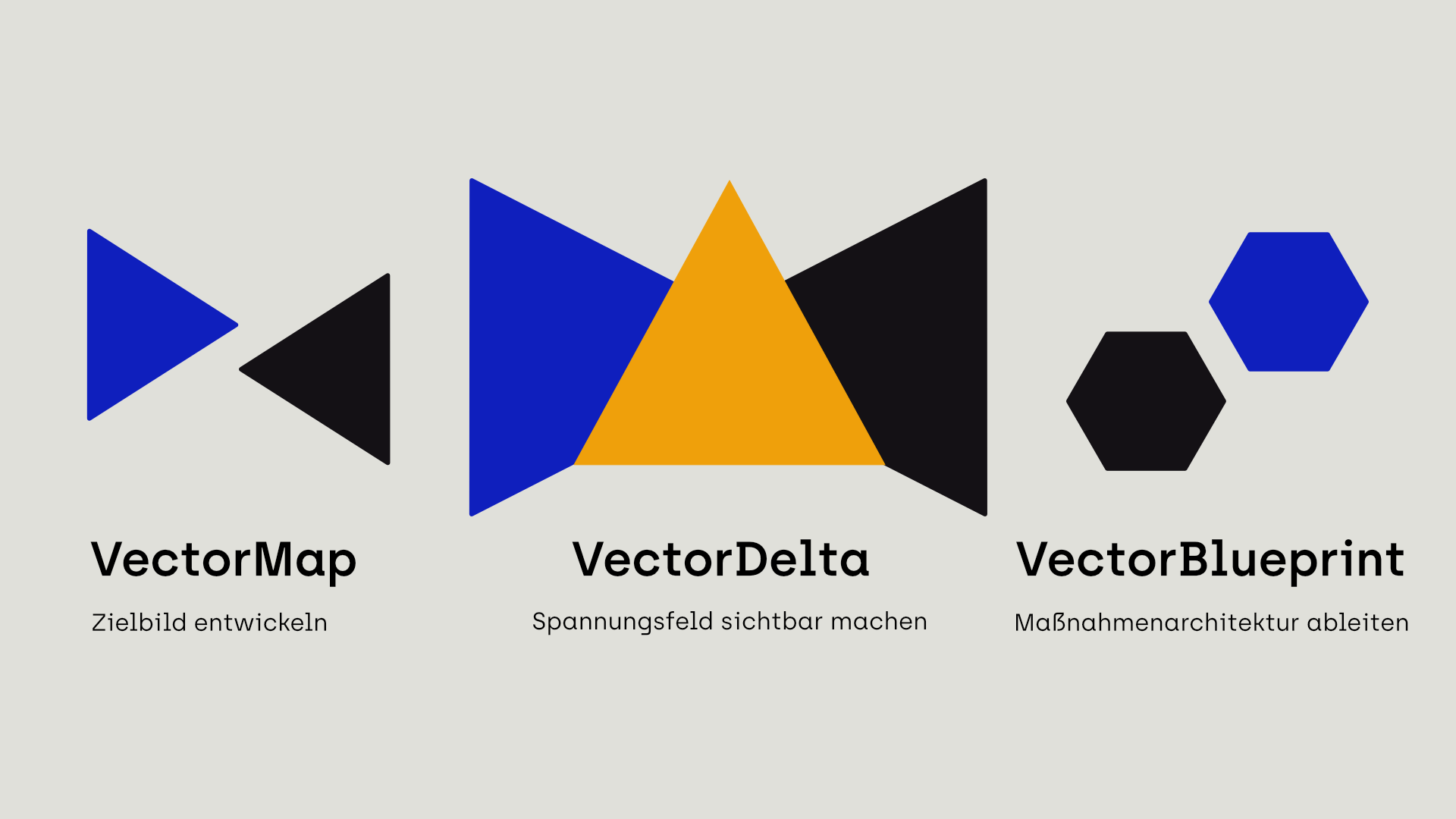
Vector³ - Clarity before commitment
Before anything changes, there needs to be a shared understanding: where does the organization want to go? Where does it stand today? And where are the critical gaps?
Vector³ is a diagnostic format that answers exactly these three questions. In co-creative workshops, we develop a target picture for all seven subsystems of the organization, analyze the current state, and derive a prioritized action architecture from it.
The result is a concrete blueprint - not a strategy paper that ends up in a drawer. Vector³ is a self-contained format. It ends with clear orientation about what needs to change and in what sequence. What happens next is your decision.
Puzzle Transformation - Change as an operating mode
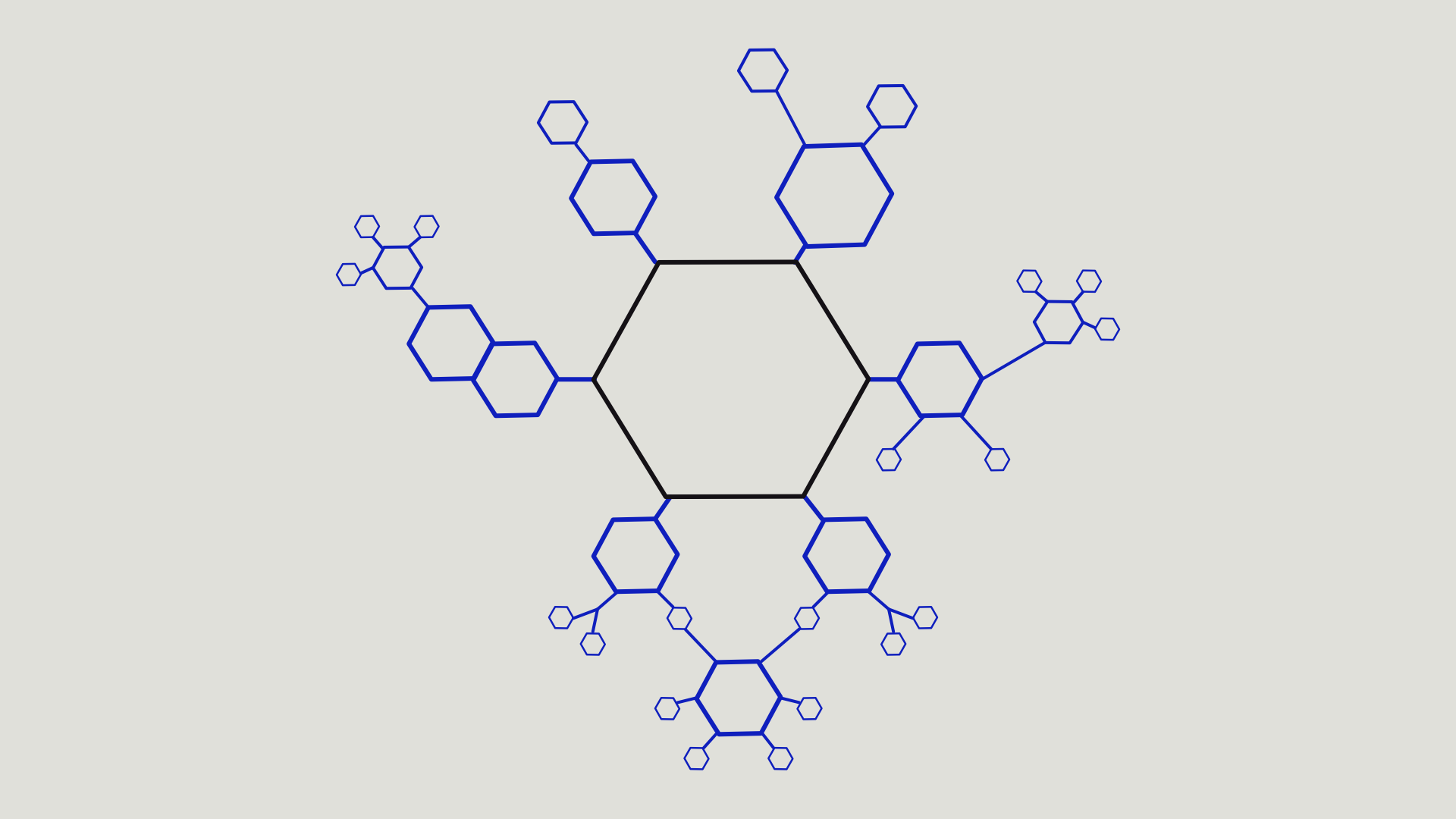
Those who move into execution after Vector³ work with Puzzle Transformation - an operating model for change that connects central direction with decentralized execution.
Leadership sets the direction and maintains the coherence of the whole system. Teams are assembled around projects and take responsibility for execution. Regular feedback loops ensure the system keeps learning and adapting.
Change stops being a one-time project. It becomes an organizational capability.
The first step is always the same: understanding what we are really dealing with.
Strategic HR Management
Strategy informs the organization. The organization informs HR. HR informs the strategy.
In practice, this interplay rarely works. Strategy, organization, and HR are considered separately – in different cycles, by different functions, with different perspectives. The result is an HR function that reacts instead of shaping the future.
Strategic HR management establishes this connection. Systematically and with a focus on what the company truly needs.
HR Transformation - from operating model to strategic function
Many HR functions were designed for a different time. The distance to the business grows while the demands on the function increase.
HR transformation means aligning the function to meet the strategic requirements of the organization - with a modular operating model and measurable value propositions for the business.
The result is an HR function that contributes to the organization's operational capacity through its interplay with strategy and structure..
Strategic Workforce Planning - systematically ensuring business capability
People decisions have long lead times. Those who don't know today which competencies the organization will need in three to five years won't have them then.
Competency gaps don't emerge overnight. They emerge because planning horizons end where the budget ends, because key positions and their holders aren't systematically identified, and because the time it takes a new person to reach full effectiveness is consistently underestimated.
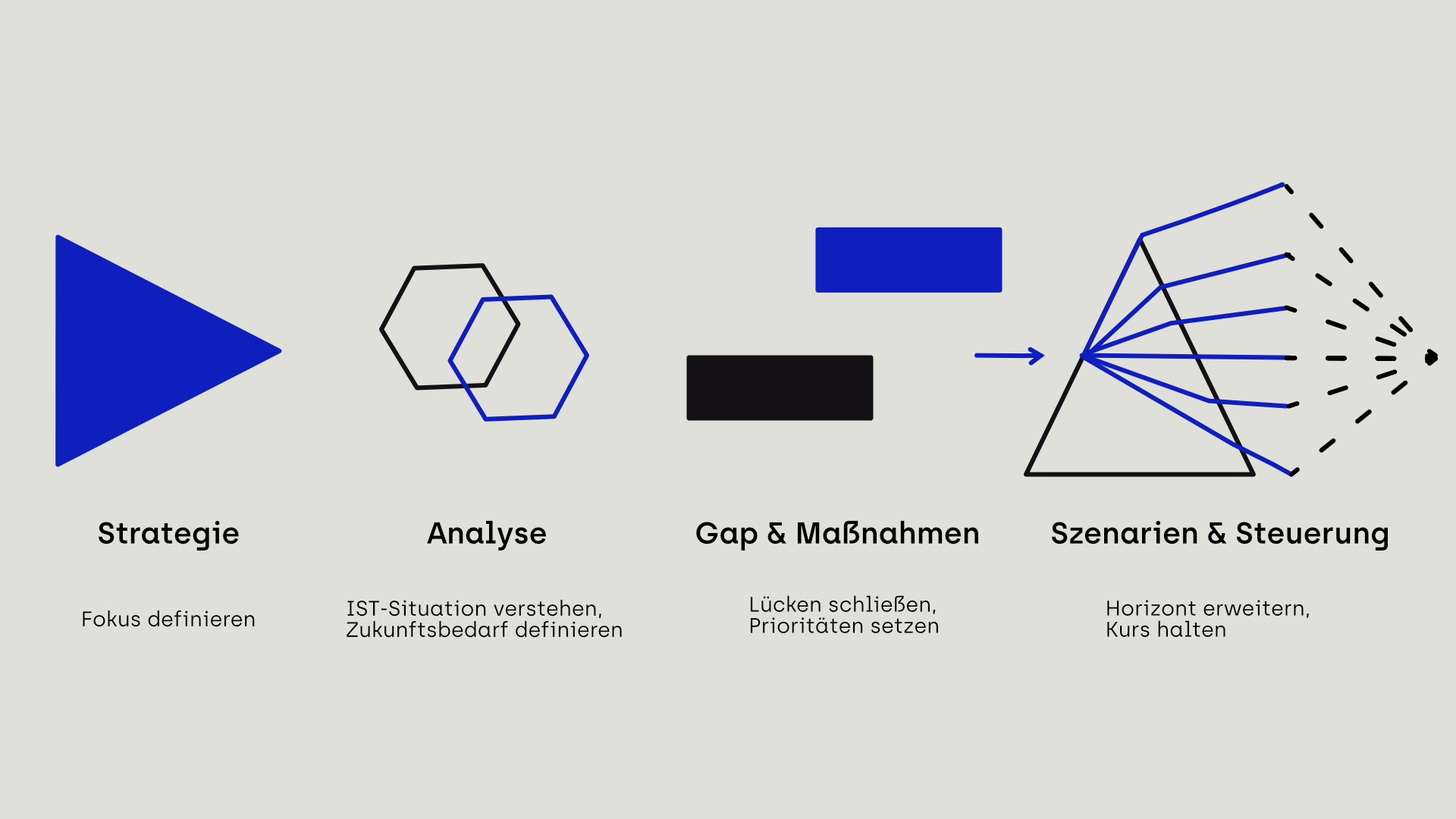
The Workforce Architecture Framework provides the structural foundation for this. It starts with strategy - what does the organization want to achieve - and analyzes the current state of the workforce against that basis. Future demand is identified, gaps are made visible, and translated into a concrete plan. Future scenarios extend the planning horizon beyond the budget cycle. Monitoring and adaptation ensure the process stays alive.
The framework is modular - it can be used as an end-to-end process or applied in individual modules as needed.
Where does your HR function stand today - and where should it be?
Sparring
Many leaders are alone with their thoughts.
There are topics that can't be discussed internally. Because the subject is too sensitive, or because there simply is no one with whom you can be fully open without having to play a role.
Sparring is not coaching. It's a conversation between equals - with someone who has the substance to think through business-relevant questions and the independence to say uncomfortable things.
You set the agenda. What emerges is a clear picture of the situation, the options, and the next steps.